

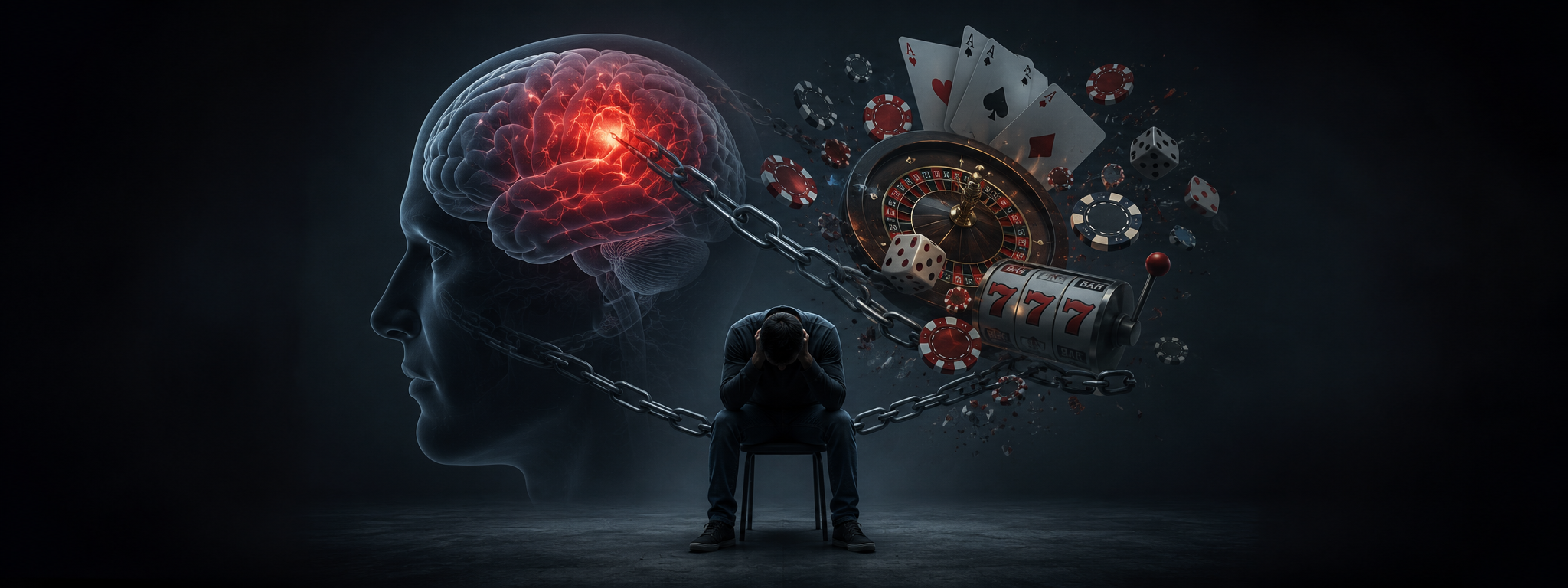
How Gambling Affects the Brain—and How Recovery Rewires It Back
Understanding the science behind addiction can be one of the most relieving parts of recovery, replacing self-blame with a clearer picture of what actually happened inside the body during active gambling.
This knowledge doesn’t erase responsibility for past harm, but it does add necessary nuance to a story that’s often told in overly simple terms of good choices versus bad ones. Recovery becomes easier to sustain when it’s understood as a biological process with its own timeline, rather than a test of character that either succeeds or fails in a single moment.
How gambling affects the brain isn’t just a matter of willpower or character. It involves real, measurable changes in brain chemistry and structure, changes that recovery can gradually help reverse over time.
This isn’t meant to excuse harmful behavior, but it does offer important context. Knowing how gambling affects the brain can shift the entire framework of recovery, from a battle against personal weakness to a process of biological healing that follows fairly predictable patterns, much like recovery from other conditions that involve the brain’s reward system.
The Role of Dopamine in Gambling
Dopamine, the brain’s reward chemical, spikes during near-wins, wins, and even anticipation, creating a powerful reinforcement loop that keeps pulling attention back toward gambling again and again. This dopamine response is central to how gambling affects the brain, since it teaches the brain to associate gambling with intense reward, even when the actual outcomes are mostly losses over the long run.
Why Near-Misses Feel Like Wins
The brain often processes a near-miss almost the same way it processes an actual win, releasing similar reward chemicals despite the outcome technically being a loss and not a win at all. This quirk is one of the more fascinating aspects of how gambling affects the brain, explaining why gambling can feel compelling even during long losing streaks that would seem, on paper, thoroughly discouraging.
The Brain’s Reward System Gets Recalibrated
Repeated high-intensity dopamine spikes gradually shift what the brain considers “normal” stimulation, making everyday pleasures feel duller and less satisfying by comparison to the intensity gambling once provided. This recalibration is a key part of how gambling affects the brain over time, explaining why ordinary life can feel flat or boring during the early stages of quitting, even when things are objectively going well.
Changes in the Brain’s Decision-Making Regions
The prefrontal cortex, responsible for judgment, impulse control, and long-term planning, becomes less influential in decision-making as addiction progresses, gradually losing ground to the brain’s more reactive reward circuitry. Understanding this shift matters for how gambling affects the brain, since it explains why logical arguments alone often aren’t enough to stop compulsive gambling behavior, even when someone genuinely wants to stop.
The Role of Stress Hormones
Chronic gambling can elevate stress hormones like cortisol, creating a cycle where gambling both causes stress and becomes a way to temporarily escape it, reinforcing itself in both directions at once. This stress response adds another layer to how gambling affects the brain, tangling emotional regulation together with the addictive behavior itself in ways that can be hard to untangle without support.
Why Willpower Alone Often Isn’t Enough
Addiction isn’t simply a failure of self-control. The brain’s reward and impulse-control systems are genuinely altered, making resistance far harder than it looks from the outside, even to the person experiencing it firsthand. Recognizing this is an important part of understanding how gambling affects the brain, since it removes the false idea that recovery is purely a matter of trying harder or wanting it more.
The Concept of Neuroplasticity
Neuroplasticity refers to the brain’s ability to form new neural pathways and adjust existing ones in response to new experiences and repeated behaviors throughout life, not just in childhood. This same mechanism that explains how gambling affects the brain during addiction is also what makes recovery from that same addiction genuinely possible over time, given consistent effort and support.
How Abstinence Begins the Rewiring Process
Once gambling stops, the brain gradually starts to recalibrate, though this process takes time and often includes an uncomfortable adjustment period before things start to genuinely improve. This adjustment period is a well-documented part of how gambling affects the brain in early recovery, sometimes called a “flattening” phase before reward sensitivity returns to a healthier baseline over several months.
New Habits Help Build New Pathways
Consistently practicing healthier behaviors, exercise, social connection, and creative hobbies helps strengthen new neural pathways that compete with old, addiction-related ones for the brain’s attention and reward response. This active rebuilding process directly counters how gambling affects the brain, replacing compulsive reward patterns with more balanced, sustainable sources of satisfaction that hold up over the long term.
The Role of Therapy in Brain Recovery
Approaches like cognitive behavioral therapy help strengthen the prefrontal cortex’s role in decision-making, essentially retraining the brain’s judgment and impulse-control systems through structured, repeated practice. This kind of targeted intervention supports recovery from how gambling affects the brain, giving the mind structured practice in regaining control over automatic responses that used to happen almost without thought.
Sleep and Brain Recovery Are Closely Linked
Quality sleep plays a critical role in memory consolidation and emotional regulation, both of which support the brain’s ability to heal from addiction-related changes over the course of recovery. Prioritizing sleep is an underrated but important factor in reversing how gambling affects the brain, since a well-rested brain adapts and heals more effectively than one running on chronic sleep deprivation.
Why Cravings Diminish Over Time
Cravings tend to be most intense early in recovery and gradually decrease in frequency and intensity as the brain’s reward system recalibrates to healthier baselines over weeks and months. This gradual decline reflects the reversible nature of how gambling affects the brain, offering genuine hope that early discomfort doesn’t last indefinitely, even when it feels unbearable in the moment.
The Brain Remembers, Even After Healing
Even after significant healing, certain triggers can still activate old neural pathways, which is why ongoing awareness remains important well into long-term recovery, even years after gambling has stopped entirely. This lingering sensitivity is part of how gambling affects the brain long-term, though its intensity and influence diminish considerably with sustained recovery and continued healthy practice.
Building a Brain-Healthy Recovery Routine
Combining consistent sleep, physical activity, social connection, and stress management creates the conditions the brain needs to heal most effectively, addressing multiple systems at once rather than relying on a single fix. This kind of holistic routine directly supports recovery from how gambling affects the brain, addressing the biological side of addiction alongside the emotional and behavioral aspects that tend to get more attention.
Why Understanding the Brain Reduces Shame
Learning about the neuroscience behind addiction often reduces self-blame, replacing “something is wrong with me” with a clearer understanding of what actually happened biologically over time. This shift in understanding is one of the most valuable outcomes of learning how gambling affects the brain, since it reframes addiction as a treatable condition rather than a personal failing or moral shortcoming.
The brain that gambling changed is the same brain capable of healing, given time, consistency, and the right support. Understanding how gambling affects the brain doesn’t excuse the harm it caused, but it does offer something equally important: genuine, science-backed hope that recovery is not just possible, but biologically supported every step of the way.
This understanding can be quietly transformative for someone deep in recovery. It replaces the exhausting narrative of personal failure with something more accurate and far more hopeful: a brain that adapted to survive an addictive pattern, and that same brain now steadily adapting its way back toward balance.
Related articles:
Gambling Addiction vs. Problem Gambling: What’s the Difference?
Coping Without Gambling: How to Sit With Discomfort Instead of Escaping It
In-Person Rehab vs. Online Counseling for Gambling Recovery: Which Works Best?
Helping Someone with Gambling Addiction: Support Without Enabling